



1. Competitive Market
In Thailand, the market is well-established and very competitive, with good domestic conglomerates and international brands. Businesses need to be brand-aware, be value focused and price sensitive and build robust partnerships in the local market.
2. High Tariffs
Thailand has relatively high import taxes, including agricultural and food products. These tariffs can reduce the competitiveness of dairy product, meat, fresh fruits, processed food and other consumer product exporters as well as raise the costs of market entry.
3.Import License Requirement
There are various products which are imported into Thailand that need licenses, permits or regulatory approvals. Further documentation needs, certification and compliance can lengthen the time taken and add administrative expense to foreign firms entering the market.
4.Government Procurement Concerns
Thailand’s government procurement system can present difficulties for foreign enterprises because of issues with transparency and the process of making decisions. Authorities can change tender requirements, deny bids or conduct a retender, which is confusing and unfavorable to businesses.
countries.
5.Strict Penalties for Undervaluing of Imports
Thailand imposes severe penalties for undervaluing imports. Even when undervaluation occurs due to negligence or an honest mistake, importers may face a prison sentence of up to 10 years. This strict enforcement approach increases the importance of accurate customs declaration.
1. Energy Sector
The energy industry in Thailand is ripe for opportunities as the country transitions to carbon neutrality and renewable energy. Solar, wind and biomass, energy storage, smart grids, LNG infrastructure and emerging technologies like hydrogen and carbon capture are all coming into play as growth areas.
2.Economic Outlook (2025)
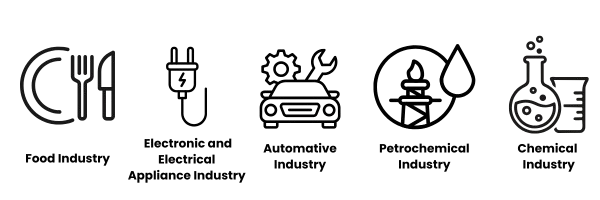
The Thai economy is expected to grow at modest rate in 2025, thanks to manufacturing investments and rising foreign direct investments. Despite the current domestic consumption difficulties, key sectors that draw investors are digital technology, electronics, electrical appliances and automotive manufacturing.
3. Infrastructure and Megaproject Development
The Thai government takes great care to develop large-scale infrastructure for the purpose of boosting economic development. Major projects encompass railways, ports, airports, logistics facilities and Eastern Economic Corridor projects, providing opportunities for construction, transportation and engineering companies.
4. Information and Communication Technology (ICT)
The ICT industry is growing rapidly as Thailand is going through change and transformation, with the penetration of the Internet and the development of e-commerce. Digital solutions are in demand as a result of government support and the increasing uptake of technology, supporting growth in telecommunications, software, cloud and cybersecurity areas.
5. Defence and Security Sector
Thailand is heavily dependent on imports for defense and security equipment to support military modernization. Continuous investment in aircraft, naval force, armored vehicles, surveillance and disaster management technologies provide opportunities to foreign suppliers and technology providers.
1. Working with Local Agents or Distributors
Partnering with local agents or distributors can be useful to ease businesses into the market of Thailand. They have industry knowledge, established networks and industry relationships that help them comply with regulations, provide access to customers and facilitates quick market penetration with lesser challenges during market entry.
2. The Eastern Economic Corridor (EEC)
The Eastern Economic Corridor (EEC) of Thailand is a strategic corridor that connects Thailand to ASEAN markets. The region supports advanced infrastructure, logistics connectivity, and advanced manufacturing, renewable energy, digital technology investment opportunities, which further promote business expansion.
3. Board of Investment (BOI) Incentives
The foreign investors in Thailand get many good incentives such as tax exemptions, import duty reduction, investment support from the Board of Investment of Thailand. Easier procedures and better incentives are provided for priority sectors, including technology, renewable energy, electronics and healthcare.
4. Good Transportation and Logistics Infrastructure
The wide range of transportation and logistics services in Thailand facilitates the smooth transport of goods and services between different regions. Ports, international airports, growing rail network and cross-border connectivity benefits logistics, enhances logistics chain efficiency and boosts access to markets in the ASEAN region.
5. Regulatory Reforms
Thailand is making regulatory reforms to enhance investment climate and doing business. The proposed changes include facilitation of access to the market, a decrease in compliance obstacles and increased flexibility for foreign companies in certain sectors.




Largest operators as national oil company in the Gulf of Thailand

One of Thailand’s longest-established international oil and gas operators

Upstream oil and gas company focused on the exploration, development, and production of petroleum resources in Southeast Asia.

Operates offshore natural gas exploration, development, and production in the Malaysia–Thailand Joint Development Area (MTJDA)
Oil and gas company operating onshore petroleum exploration and production assets in Thailand

Thailand-based upstream energy company operating onshore oil concessions and producing crude oil and natural gas in Phetchabun Province.

Thai utility and energy company providing integrated energy, industrial utility, and environmental management services
Upstream oil and gas company engaged in the acquisition, exploration, development, and production of petroleum assets in Thailand
Engineering, fabrication, and offshore construction services for oil and gas projects
Engineering, procurement, and construction (EPC) contractor serving the energy sector

Engineering, procurement, construction, installation, and commissioning (EPCIC) services for the oil and gas industry
Provides engineering and technical services for oil and gas production and processing
Specializes in non-destructive testing (NDT), inspection, and asset integrity services
Provides eavy steel fabrication and construction for offshore platforms, refineries, and energy infrastructure

EPC contractor providing engineering, procurement, and construction services for energy and industrial projects

Provides maintenance, engineering, manpower, and technical support services for the oil and gas industry

Provides engineering, procurement, construction, commissioning (EPCC), and maintenance services for the oil & gas industry.

Provides offshore crane services, hook-up and commissioning, maintenance, and integrated engineering solutions

Provides engineering consultancy, project management, and technical advisory services for oil and gas projects
Provides integrated offshore production solutions, including floating production, storage and offloading (FPSO) facilities, offshore marine services, and renewable energy solutions

Provides Hydraulic Workover Unit (HWU), supply production chemicals and oilfield chemicals, including technical services in the Bualuang Field in the Gulf of Thailand
Provides corrosion engineering, asset integrity management, inspection, and non-destructive testing (NDT) services

Provides offshore marine support and logistics services for the oil and gas industry

Provides industrial procurement, supply chain, and equipment supply services for oil and gas operations

 EN
EN  MY
MY